Dodoswap fees Is a guide to swap costs and revenue
Dodoswap fees Is the total cost a trader should consider when using DODO to swap tokens: the pool or route fee, network gas, price impact, and any slippage caused by liquidity conditions. DODO is a multi-chain decentralized exchange and liquidity protocol, so the exact cost can change by chain, token pair, route, trade size, and market activity. Users should always verify live fee, quote, and contract details through official DODO interfaces before trading.
Dodoswap fees matter because a swap can look simple on screen while several cost layers sit underneath the final received amount. A user may see one quoted exchange rate, but the transaction still depends on block space demand, liquidity depth, routing, and the way the protocol handles the selected pair. For small swaps, gas may dominate the cost. For larger swaps, price impact and pool depth can matter more than the displayed fee percentage.
Dodoswap fees also matter to liquidity providers, analysts, and people comparing DeFi venues. Fee generation is one way a decentralized exchange shows real usage, while protocol revenue can show how much of that activity is retained by the protocol rather than paid out or absorbed elsewhere. Those figures are not the same as profit for a token holder, and they should not be read as an investment promise. They are practical operating metrics for understanding how active the market is.
What are Dodoswap fees?
Dodoswap fees are the trading and transaction costs connected with swapping crypto assets through DODO. In plain language, they include the explicit swap fee shown or implied in a pool, the gas paid to the blockchain, and the difference between the expected and executed price. DODO is known for a liquidity design built around a proactive market maker model, but users still face normal DeFi realities such as volatile prices, thin pools, and chain congestion.
Dodoswap fees should be read as a cost range rather than one fixed number across the whole protocol. A swap on Ethereum can feel very different from a swap on BNB Chain, Polygon, Arbitrum, Base, or Avalanche because each chain has its own gas market and liquidity profile. The same token symbol can also have different liquidity on different networks, which means Dodoswap fees can change even when the user thinks they are making the same trade.
Dodoswap fees are often discussed beside volume, revenue, and total value locked. Volume shows how much trading passes through the protocol, fees show what traders paid, and revenue attempts to describe the portion retained by the protocol. These numbers can move differently. A market can have high volume but modest fee capture, or lower volume with relatively steadier fees if trading concentrates in certain pools.
How do Dodoswap fees work during a token swap?
Dodoswap fees begin with the route selected for a trade. When a user enters a token pair and amount, the interface estimates how much output token the user should receive. That estimate reflects available liquidity, pool parameters, routing logic, and the current on-chain state. Before signing, the wallet usually shows a transaction request, and the user should compare the quoted output with the minimum received amount.
Dodoswap fees then interact with gas. Gas is paid to validators or network participants on the chain, not simply to DODO. During busy periods, the gas portion can rise quickly, especially on networks where block space is expensive. On lower-cost chains, gas may be small, but it is still real. A trader comparing Dodoswap fees across chains should include gas in the comparison instead of looking only at the pool fee.
Dodoswap fees also include price impact. Price impact is the movement in execution price caused by the trade itself. If a pool is deep and active, a normal trade may execute close to the quoted market price. If liquidity is shallow, a larger swap may push the price and reduce the received amount. This is why two users can pay different effective Dodoswap fees for the same token pair at different trade sizes.
Why are Dodoswap fees different from protocol revenue?
Dodoswap fees and protocol revenue are related, but they are not identical. Fees describe what traders pay to use liquidity or routing. Revenue describes what the protocol may retain after the fee structure is applied. Some value can go to liquidity providers, some can be retained by the protocol, and some costs, such as gas, do not become protocol revenue at all. This distinction helps users avoid overreading fee statistics.
Dodoswap fees can therefore rise without revenue rising in the same proportion. For example, more trading on a chain may produce more fee activity, but the protocol share depends on the specific fee model and pool configuration. Public dashboards often separate total fees, revenue, earnings, and holder revenue because each metric answers a different question. A careful reader should avoid treating them as interchangeable.
Dodoswap fees can be useful for protocol research when viewed next to , TVL, and volume. A higher fee total may indicate more trading demand, while revenue can indicate protocol capture. Neither metric alone proves that a token is undervalued, safe, or likely to perform well. Crypto markets remain speculative, and users should verify current data before making financial decisions.
What costs should a trader check before using DODO?
Dodoswap fees are easiest to understand when a user breaks the transaction into separate checks. The visible quote is only the beginning. The wallet confirmation, minimum received amount, chain, token contract, and slippage setting all deserve attention. This is especially important for newer users who may confuse a good quoted rate with a guaranteed final result.
- Check the selected chain and confirm that the wallet is on the same network.
- Review the estimated output and the minimum received amount before signing.
- Compare the network gas cost with the size of the swap.
- Look at price impact, especially for larger or less common token pairs.
- Confirm token contracts through official sources to avoid fake assets.
- Recheck the route if the market moves or the quote expires.
Dodoswap fees can become less predictable when a trade is left pending or when the market is moving quickly. A transaction may execute after other trades change the pool state. Slippage tolerance protects the user by setting a minimum acceptable output, but a very high tolerance can create avoidable risk. In practice, the best setting depends on the asset, market conditions, and the urgency of the trade.
How do Dodoswap fees compare across chains?
Dodoswap fees vary across chains because each network has different liquidity, user activity, and gas economics. Ethereum often has deeper liquidity for some assets, but gas can be expensive during congested periods. BNB Chain, Polygon, Arbitrum, Base, Avalanche, and other supported networks may offer lower transaction costs, but the best route depends on the specific pair and available liquidity at that moment.
Dodoswap fees should not be compared by chain name alone. A low-gas chain can still produce a poor effective trade if the pool is shallow or the route has high price impact. A higher-gas chain can sometimes produce a better final result for a larger swap if liquidity is deeper. The useful comparison is the final received amount after all costs, not a single headline fee number.
Dodoswap fees can also reflect where the protocol is most active. If most trading volume is concentrated on one chain, that chain may show stronger liquidity for certain pairs. Another chain may still be useful for smaller transactions or specific tokens. Users comparing DODO with other decentralized exchanges should check live quotes across venues rather than assuming one route is always best.
What are the main use cases for tracking Dodoswap fees?
Dodoswap fees are useful for ordinary swaps, but they also help different types of DeFi users make better decisions. A trader may use fee data to decide whether a route is worth taking. A liquidity provider may review fees to understand whether a pool has meaningful activity. A protocol analyst may compare fees, revenue, TVL, and volume to evaluate whether usage is concentrated or broad.
Dodoswap fees are especially relevant for users who trade across multiple networks. Multi-chain activity can reduce dependence on one chain, but it also adds operational risk. Bridges, wrapped assets, chain-specific token contracts, and wallet settings all create chances for mistakes. Fee tracking is only one part of the workflow; chain verification and contract verification are just as important.
Dodoswap fees also provide context for . Volume without fees may suggest low-cost routing or different pool economics, while fees without strong volume may require closer inspection. The relationship between volume and fees can help users understand whether trading activity is broad, seasonal, incentive-driven, or concentrated in a small number of pairs.
How can a new user estimate Dodoswap fees step by step?
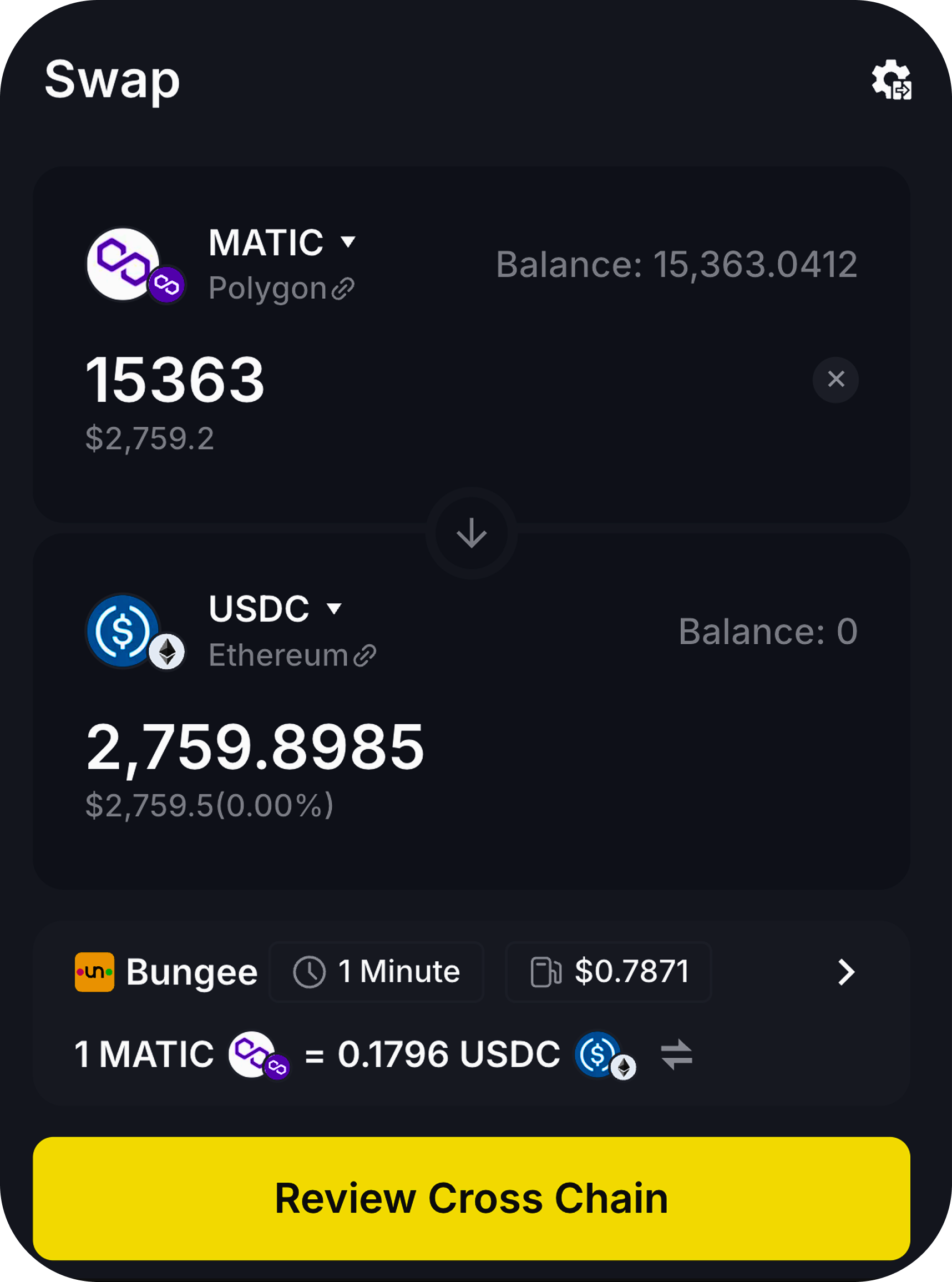
Dodoswap fees can be estimated before a swap by moving slowly through the quote flow. First, choose the intended chain and connect the correct wallet. Second, select the input and output tokens, then verify that the token contracts are legitimate. Third, enter the trade size and review the output amount, price impact, and route. Fourth, open the wallet confirmation and compare the gas estimate with the trade value.
Dodoswap fees should be checked again if the quote changes or if the transaction waits for too long. DeFi prices move continuously, and liquidity can shift between the moment a quote appears and the moment a transaction confirms. If the minimum received amount looks too low, the trade may not fit the user’s risk tolerance. Cancelling, resizing, or trying a different chain may be more sensible than accepting an unfavorable execution.
Dodoswap fees are not the only risk in the process. The user should also understand wallet permissions. Some swaps require token approval before the swap itself, which means there can be a separate approval transaction and gas cost. Approval settings should be reviewed carefully, and unnecessary allowances should be managed with reputable wallet or security tools.
What benefits can Dodoswap fees reveal about the protocol?
Dodoswap fees can reveal whether traders are actively using DODO rather than merely depositing liquidity. Total value locked can show capital parked in the protocol, but fee activity points toward actual transaction demand. When fee data is viewed over daily, weekly, monthly, and cumulative periods, it can help users see whether activity is temporary or persistent.
Dodoswap fees may also show how activity spreads across chains. A protocol with meaningful fee generation on several networks can have a different risk profile from a protocol dependent on one chain or one pair. However, multi-chain presence is not automatically safer. It can add complexity, require more monitoring, and expose users to chain-specific outages, bridge risk, or fragmented liquidity.
Dodoswap fees can help users compare DODO with other automated market makers, aggregators, and liquidity venues. The comparison should include final execution, gas, slippage, token availability, liquidity depth, and user interface clarity. A venue that is best for one token pair may be average for another. The practical goal is not to find a perfect exchange, but to find the best current route for the specific trade.
What risks should users consider with Dodoswap fees?
Dodoswap fees do not remove normal DeFi risk. Smart contract vulnerabilities, oracle assumptions, liquidity changes, governance decisions, chain congestion, and user error can all affect outcomes. Even when a swap executes correctly, the market price of the token can move sharply afterward. Users should never treat a low fee as proof that a trade is safe or suitable.
Dodoswap fees can also be misunderstood when users focus on the cheapest route only. Very low apparent cost may hide thin liquidity, suspicious tokens, or a route that depends on volatile assets. A practical review includes contract verification, liquidity depth, recent trading activity, slippage tolerance, and wallet permissions. Users should verify important details through official DODO resources and their own wallet before approving transactions.
Dodoswap fees are best approached as one part of a broader risk check. DeFi users should avoid sending funds they cannot afford to lose, should test unfamiliar chains with small amounts, and should keep records of transaction hashes for later review. This is not financial advice; it is a practical reminder that fee efficiency and safety are separate questions.
Are Dodoswap fees worth comparing before every trade?
Dodoswap fees are worth comparing whenever the trade size is meaningful, the token is illiquid, or the network is congested. For tiny swaps, the time spent comparing routes may not be worth much, but gas can still make a small trade inefficient. For larger swaps, a small percentage difference in price impact can matter more than the visible pool fee.
Dodoswap fees should be compared with the final output from other available routes, not just with advertised fee rates. Decentralized exchange aggregators, direct DEX interfaces, and chain-specific venues may all produce different quotes. The best comparison uses the same token pair, same chain, same trade size, and roughly the same market moment. Otherwise, the comparison may be misleading.
Dodoswap fees Is ultimately a practical topic about execution quality, not just a statistic on a dashboard. A good swap decision accounts for fee rate, gas, liquidity, price impact, slippage, chain conditions, and personal risk limits. DODO can be a useful DeFi venue for many users, but every transaction should be checked in real time, because live blockchain conditions decide the final result.
Questions and Answers
What are Dodoswap fees in simple terms?
Dodoswap fees are the costs connected with swapping tokens through DODO. They can include the pool or route fee, blockchain gas, price impact, and slippage. The exact cost changes by chain, token pair, trade size, and market conditions. Users should review the live quote and wallet confirmation before approving any transaction.
Are Dodoswap fees the same on every blockchain?
No. Dodoswap fees can feel different across Ethereum, BNB Chain, Polygon, Arbitrum, Base, Avalanche, and other supported networks because gas costs and liquidity depth vary. A lower-gas chain may not always give the best final output if liquidity is thin. The useful comparison is the final received amount after all estimated costs.
How do Dodoswap fees differ from DODO protocol revenue?
Dodoswap fees describe what traders pay while using pools or swap routes. Protocol revenue is the portion that may be retained by the protocol after the fee model is applied. Gas is paid to the blockchain network and is not protocol revenue. This is why fee totals, revenue, and holder revenue should be read as separate metrics.
How can I estimate Dodoswap fees before trading?
Start by selecting the right chain and token pair, then review the quoted output, price impact, slippage setting, and minimum received amount. Open the wallet confirmation and compare the gas estimate with your trade size. If the quote changes, the transaction is delayed, or the minimum received amount looks too low, reassess before signing.
Why can Dodoswap fees change after I enter a swap amount?
Dodoswap fees can change because DeFi markets update continuously. Other trades may alter pool liquidity, gas prices can move, and token prices can shift before your transaction confirms. The quote is an estimate based on current conditions, while the final result depends on execution at confirmation time and your slippage settings.
Do low Dodoswap fees mean a trade is safe?
Low Dodoswap fees do not guarantee safety. A trade can still involve smart contract risk, fake tokens, thin liquidity, bridge risk, volatile prices, or excessive wallet permissions. Fee efficiency should be considered alongside contract verification, liquidity checks, route quality, and personal risk tolerance. Always verify important details through official sources.
What is the best way to compare Dodoswap fees with other swaps?
Compare the final estimated output for the same token pair, chain, trade size, and market moment. Include gas, price impact, slippage, and any approval transaction cost. A venue with a lower displayed fee may still produce a worse result if liquidity is shallow or routing is inefficient.