Dodoswap Is a Practical Guide to DODO Swaps, Liquidity, Fees and Risk
Dodoswap Is a decentralized exchange experience built around DODO, a DeFi protocol for token swaps and liquidity markets across multiple blockchains. Users search for Dodoswap to understand how the swap interface works, what TVL and volume data mean, how fees are generated, and what risks exist before connecting a wallet. In plain terms, Dodoswap helps traders exchange tokens without a centralized order book, while liquidity providers and market makers supply the assets that make those trades possible.
Dodoswap sits in the broader category of automated market maker exchanges, but it is often discussed separately because DODO popularized a Proactive Market Maker model. Instead of relying only on a simple constant product curve, the protocol attempts to concentrate liquidity around market prices and improve capital efficiency. That distinction matters because users are usually not just asking whether Dodoswap can execute a trade. They also want to know whether a pool has enough depth, whether the quoted route is competitive, and whether the risks are appropriate for the trade they are considering.
The name Dodoswap is commonly used by users as shorthand for swapping through DODO or checking DODO-related liquidity and market data. This page is an independent informational guide. It does not claim affiliation with the original protocol, and it should not be treated as financial advice. Crypto markets move quickly, smart contracts can fail, and public dashboards can lag or update differently. Anyone using Dodoswap should verify current contract addresses, supported chains, fees, and token details through official sources before sending funds.
What is Dodoswap?
Dodoswap is best understood as a user-facing way to describe token swaps powered by DODO's decentralized exchange infrastructure. A trader connects a self-custody wallet, selects an input token, chooses an output token, reviews the estimated price, and submits a blockchain transaction. The trade settles through smart contracts instead of a centralized exchange account. That means the user controls the wallet, but it also means the user is responsible for approvals, gas costs, token selection, and security checks.
Dodoswap belongs to the decentralized finance ecosystem, alongside liquidity pools, DEX aggregators, bridges, lending protocols, yield dashboards, and on-chain analytics tools. The protocol has historically appeared across several chains, including networks such as Ethereum, BNB Chain, Polygon, Arbitrum, Avalanche, Base, and other EVM-compatible environments. Availability can change over time, so the practical question is not only whether Dodoswap exists on a chain, but whether the specific token pair has meaningful liquidity there.
Dodoswap also has a token context because DODO is both a protocol brand and a crypto asset. The DODO token may appear in market data, governance discussions, treasury dashboards, centralized exchange listings, and DEX trading pairs. A reader should keep those concepts separate. Using Dodoswap for a token exchange is different from buying or holding the DODO token, and neither action guarantees any return.
How does Dodoswap work for a token swap?
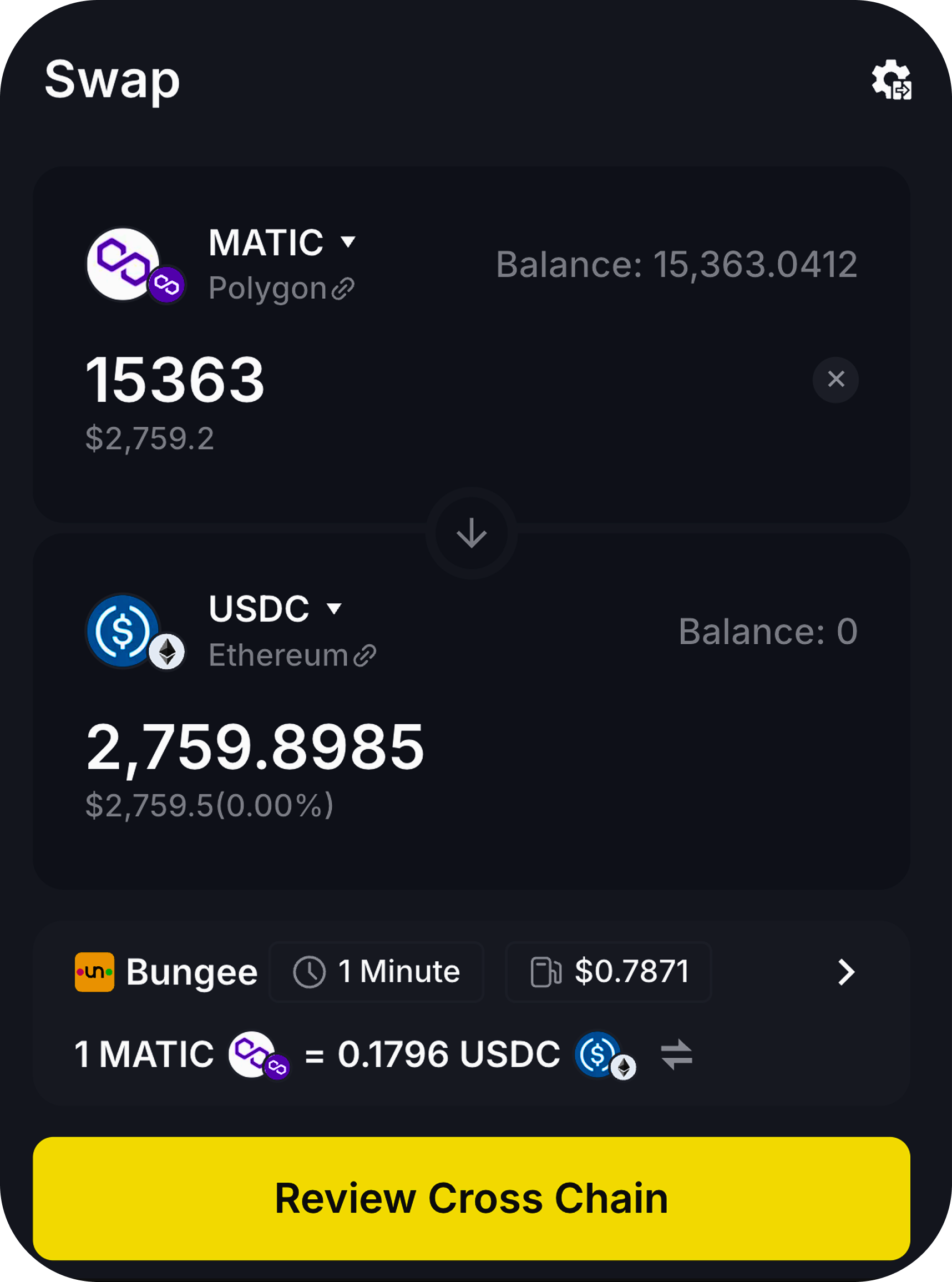
Dodoswap works by using smart contracts to match a user's trade against liquidity available in DODO pools or connected routing infrastructure. When a trader enters a swap, the interface estimates an output amount based on current pool balances, oracle or reference pricing assumptions where applicable, price impact, slippage tolerance, and network fees. The user then signs the transaction from a wallet such as MetaMask, Rabby, Coinbase Wallet, or another compatible wallet.
The protocol's better-known design idea is the Proactive Market Maker, often shortened to PMM. A traditional automated market maker can spread liquidity across a broad price range, which may leave only part of the capital useful near the current market. DODO's approach is designed to place more liquidity around a reference price so trades can potentially face lower slippage when conditions are healthy. In practice, Dodoswap still depends on live liquidity, asset volatility, gas prices, and the quality of the route presented to the user.
For a new user, the most important screen is the final confirmation preview. Dodoswap may show the expected output, minimum received after slippage, route, fee, and price impact. A small difference between quoted and executed price is common in DeFi, especially during volatile markets. A large price impact or a confusing token warning should be treated as a reason to pause and verify details before signing.
Why do people use Dodoswap?
Dodoswap is used by several groups of DeFi participants. Active traders may use it to exchange tokens directly from a wallet. Liquidity providers may review DODO pools to decide whether supplying assets fits their risk tolerance. Analysts may compare DODO's total value locked, fees, revenue, and DEX volume against other protocols. Project teams may also care about Dodoswap because token liquidity on a decentralized exchange can help users enter or exit a market without relying only on centralized venues.
Dodoswap can be especially relevant when a token has deeper liquidity on DODO than on another single exchange, or when a routing path finds a better quote through DODO liquidity. Users often compare quoted output across interfaces before trading because the best route can vary by chain, token, trade size, and moment in time. Dodoswap is not automatically the cheapest option for every swap, but it is a recognizable part of the multichain DEX landscape.
The protocol is also watched because its metrics tell a story about usage. TVL can suggest how much capital is deposited in pools. DEX volume can show trading activity. Fees can indicate what users pay to execute swaps, while revenue and earnings dashboards try to show how much value remains with the protocol after fee distribution rules. These numbers are useful, but Dodoswap metrics should always be read as snapshots rather than promises.
How should users read Dodoswap TVL, fees and volume?
Dodoswap data is often presented through dashboards that track total value locked, chain-level liquidity, cumulative volume, recent fees, and protocol revenue. TVL is the headline number many people notice first, but it is not a complete health score. A protocol can have modest TVL and still process meaningful volume in selected pools, while a large TVL number can be concentrated in assets or chains that are not relevant to a user's intended trade.
Dodoswap fee data can be helpful when evaluating activity, yet fees need context. A thirty-day fee total may rise because more trades occurred, because market volatility increased, or because a few larger pools handled more volume. Revenue is a narrower figure and may reflect protocol-level fee capture rather than the full amount paid by traders. If a dashboard separates fees, revenue, holders revenue, incentives, and earnings, users should read the definitions carefully before comparing Dodoswap with another DEX.
Volume is another important but imperfect signal. Dodoswap DEX volume shows how much value moved through swap activity during a period. Chain-level volume can reveal whether Ethereum, BNB Chain, Polygon, Arbitrum, Avalanche, Base, or another network is carrying most of the trading. A user planning a swap should care less about protocol-wide cumulative volume and more about current liquidity, route quality, and slippage for the exact pair they want to trade.
For readers who want a deeper primer on interpreting DeFi statistics, a related guide to can help explain why locked value, trading depth, and user demand are different measurements. Dodoswap makes more sense when those terms are separated rather than compressed into one ranking.
What is the usual Dodoswap workflow?
Dodoswap follows a familiar decentralized exchange workflow, but each step deserves attention because blockchain transactions are hard to reverse. The interface may feel simple, yet the underlying action can involve token approvals, price movement, bridge assumptions, gas fees, and contract risk. A careful user slows down before approving any asset or signing a final swap.
- Open the intended Dodoswap interface or trusted app path and confirm the URL, chain, and wallet connection.
- Select the token being sold and the token being bought, using verified token contract addresses where possible.
- Review the quoted output, price impact, route, liquidity source, estimated network fee, and minimum received amount.
- Set slippage based on the token's liquidity and volatility, avoiding unnecessarily high tolerance.
- Approve only the needed token allowance when possible, then submit the swap and monitor the transaction.
- After settlement, confirm the wallet balance and consider revoking unused approvals for added hygiene.
Dodoswap users should be especially careful with lookalike tokens. Many chains allow anyone to create a token using a familiar name or ticker. The safest habit is to verify the contract address through official project channels and reputable explorers before swapping. This matters for DODO-related markets, meme tokens, stablecoins, wrapped assets, and newly launched tokens.
What are the benefits of Dodoswap?
Dodoswap offers the main benefit that draws users to decentralized exchanges: direct wallet-based trading without opening a centralized exchange account. This can be useful for users who already operate on-chain, need access to a specific token pair, or prefer to settle trades through smart contracts. The experience can be faster than moving assets through a custodial venue, though speed depends on the chain and current congestion.
Dodoswap also has a design focus on liquidity efficiency. The PMM concept aims to use capital more actively around the market price, which can improve execution under the right conditions. For liquidity providers, this design may be appealing because idle liquidity is a common problem in DeFi markets. For traders, the visible benefit is a quote that may compete well against other DEXs for certain assets and trade sizes.
Another benefit is multichain access. Dodoswap can appear in analysis across several networks, so users may encounter DODO liquidity while comparing routes on Ethereum or lower-cost EVM chains. Multichain deployment can broaden access, but it also introduces fragmentation. The Dodoswap experience on one chain is not automatically identical to the experience on another, especially when gas, bridge liquidity, token wrappers, and pool depth differ.
What risks should Dodoswap users consider?
Dodoswap carries the same broad risks that apply to DeFi swaps. Smart contracts may contain bugs, front-end sites may be spoofed, wallets can be compromised, and token prices can move sharply between quote and settlement. A swap that looks small in dollar terms can still expose a wallet to approval risk if the user grants unlimited spending permission to a malicious or outdated contract.
Dodoswap also exposes liquidity providers to market risk and impermanent loss. Providing assets to a pool is not the same as holding those assets in a wallet. If prices move, the pool composition can change, and the value withdrawn may differ from the value a user would have had by simply holding. Fees can offset some losses in active pools, but there is no guaranteed outcome.
The protocol's multichain nature adds operational risk. Users need to know which network they are on, whether the token is native or bridged, and whether the liquidity pool is active. Bridges and wrapped tokens can introduce additional dependencies outside the core Dodoswap trade. A token that is liquid on Ethereum may be thinly traded on another chain, and a route that looks acceptable for a small swap may be poor for a larger one.
Dodoswap users should verify current details with official sources before making decisions. This includes contract addresses, supported networks, fee rules, governance changes, and any announcements about migrations or security incidents. Nothing on this page is investment advice, and no DeFi interface can remove the need for personal due diligence.
How does Dodoswap compare with other DEX options?
Dodoswap is often compared with other automated market makers, DEX aggregators, and order-book-style decentralized exchanges. The right comparison depends on the user's goal. A trader looking for the best output may compare Dodoswap against aggregator quotes. A liquidity provider may compare pool design, fee capture, incentives, and historical utilization. A researcher may compare TVL, fees, revenue, and chain distribution.
| Option | Typical strength | Main tradeoff |
|---|---|---|
| Dodoswap | PMM-based liquidity design and multichain DODO markets | Liquidity quality varies by pair and chain |
| Standard AMM DEX | Broad familiarity and many token pools | Capital may be spread inefficiently for some pairs |
| DEX aggregator | Compares routes across multiple venues | Execution may involve more contracts and routing complexity |
| Centralized exchange | Simple account-based trading for listed assets | Requires custody and may not list smaller tokens |
Dodoswap can be part of a broader routing decision rather than the only place a user checks. In practice, many DeFi users compare quotes, confirm the token address, check pool depth, and then choose the route that offers a sensible balance of output, risk, and transaction cost. For a related explanation of direct swap tools, see the internal guide to .
How can a new user approach Dodoswap carefully?
Dodoswap is easiest to approach when the user treats the first transaction as a test rather than a full commitment. A small swap can confirm that the wallet, network, token address, and interface behave as expected. This is especially useful on chains the user has not used before, where gas tokens, explorer links, and wallet prompts may differ from Ethereum mainnet.
Dodoswap users should keep records of what they approve and where they trade. Token approvals can be reviewed through reputable wallet tools and block explorers. Hardware wallets can add protection for larger balances, but they do not protect against approving the wrong transaction if the user does not read prompts carefully. Security is a process, not a single setting.
For tax, compliance, and accounting needs, Dodoswap trades are on-chain events that may need to be tracked. Users in the United States or any other jurisdiction should understand that crypto swaps can have reporting consequences. This page does not provide tax or legal advice. Anyone with material trading activity should consult qualified guidance suited to their situation.
Where does Dodoswap fit in the DeFi landscape?
Dodoswap fits into the part of DeFi that tries to make token markets more accessible, transparent, and programmable. Its role is not only to provide a swap button, but to participate in a wider market structure where liquidity providers, traders, projects, analysts, and governance participants all watch different signals. TVL, fees, revenue, treasury data, token price, and cumulative volume each answer a different question.
Dodoswap is most useful when readers understand both the opportunity and the limits. It can provide access to decentralized liquidity and competitive execution in the right conditions. It can also expose users to slippage, volatile tokens, smart contract risk, fake assets, and chain-specific complications. The practical approach is to verify details, compare routes, use sensible trade sizes, and avoid treating any dashboard metric as a guarantee.
Dodoswap remains a recognizable name in decentralized exchange discussions because DODO introduced a distinctive market-making model and operates across multiple DeFi environments. For users, the core lesson is straightforward: understand the asset, understand the chain, understand the quote, and understand the risk before signing. With that mindset, Dodoswap can be evaluated as one tool in a larger DeFi toolkit rather than as a promise of easy profit.
Questions and Answers
What is Dodoswap used for?
Dodoswap is used to describe token swapping through DODO's decentralized exchange infrastructure. Users connect a self-custody wallet, choose tokens, review the quote, and submit an on-chain transaction. It may also be researched for liquidity, TVL, fees, revenue, and DEX volume data. It is not a guaranteed investment tool, and users should verify current protocol details before trading.
How does Dodoswap differ from a regular automated market maker?
Dodoswap is associated with DODO's Proactive Market Maker model, which is designed to concentrate liquidity closer to market prices rather than spreading it evenly across a broad curve. The practical goal is more efficient liquidity and potentially better execution in healthy pools. Results still depend on live liquidity, token volatility, chain conditions, gas costs, and trade size.
Is Dodoswap safe to use?
Dodoswap has the same broad risks as other DeFi applications: smart contract bugs, fake websites, malicious tokens, approval risk, volatile pricing, and slippage. Safety depends on using the correct interface, verifying token contract addresses, reading wallet prompts, and checking current official information. No decentralized exchange can make crypto trading risk-free.
What do TVL and volume mean for Dodoswap?
TVL shows how much value is deposited in liquidity pools, while volume shows how much trading activity passed through the protocol during a period. Both metrics are useful, but neither proves that a specific swap will be cheap or safe. For an actual trade, current pool depth, price impact, slippage, and network fees matter more.
Can I provide liquidity on Dodoswap?
Users may be able to provide liquidity to DODO markets where supported, but availability depends on the chain, pool, and current protocol interface. Liquidity providers can earn fees, yet they also face token price risk, impermanent loss, smart contract risk, and changing incentives. Review pool details carefully and do not assume historical fee activity will continue.
Does Dodoswap work on multiple blockchains?
DODO-related liquidity has appeared across multiple EVM-compatible networks, including major DeFi chains. The exact availability of Dodoswap markets can change, and liquidity may differ substantially by chain. Before swapping, confirm that your wallet is connected to the intended network and that the token address, pool depth, and route are correct.
Is Dodoswap the same as buying the DODO token?
No. Using Dodoswap means interacting with a swap or liquidity interface, while buying DODO means acquiring the protocol's token. A person can use a DODO-powered swap without making a long-term token investment, and holding the token does not guarantee profit or special protection. Treat trading, liquidity provision, and token ownership as separate decisions.